
Looking for an easy Oyakodon recipe that delivers Japanese comfort food without complicated ingredients? This simple chicken and egg rice bowl combines tender chicken, sweet onions, savory soy sauce, mirin, and soft eggs, all gently simmered together in one pan.
Served over freshly steamed rice, Oyakodon is a satisfying meal that’s perfect for a quick lunch or a comforting family dinner.
What makes this version especially convenient is its simplicity. Using chicken bouillon as the broth base gives the dish a savory foundation without needing to prepare traditional Japanese dashi from scratch.

Highlights of the Dish
- One-pan cooking: Chicken, onions, seasonings, and eggs cook together in the same pan.
- Simple ingredients: Uses accessible pantry staples such as soy sauce, mirin, and chicken bouillon.
- Comforting flavors: A balance of savory, slightly sweet, and rich flavors.
- Customizable eggs: Cook them until softly set or firmer, depending on your preference.
- Perfect with rice: The seasoned cooking liquid flavors the rice underneath.
Table of Contents
What Is Oyakodon?
Oyakodon (親子丼) is a traditional Japanese rice bowl featuring chicken and eggs simmered with onions in a savory-sweet broth, then served over steamed rice.
The name literally means parent-and-child rice bowl, referring to the chicken and eggs used in the dish.
It belongs to the Japanese family of rice bowls known as donburi, where cooked ingredients are served directly over rice.
Traditional versions often use dashi, soy sauce, mirin, and sometimes sugar to create the broth. Our homemade version uses chicken bouillon, making it easier to prepare with ingredients commonly available in Filipino kitchens.
Why This Easy Oyakodon Recipe Works
- Chicken bouillon adds savory depth. It provides an accessible substitute for the umami-rich broth traditionally made with dashi.
- Onions develop natural sweetness. As they simmer, they soften and complement the salty soy sauce.
- Mirin balances the seasoning. Its gentle sweetness helps round out the savory flavors.
- Eggs create a soft finish. Adding beaten eggs toward the end allows them to set gently around the chicken and onions.
- Rice completes the dish. The flavorful broth soaks into the hot rice, making every spoonful satisfying.
Key Ingredients for Homemade Oyakodon
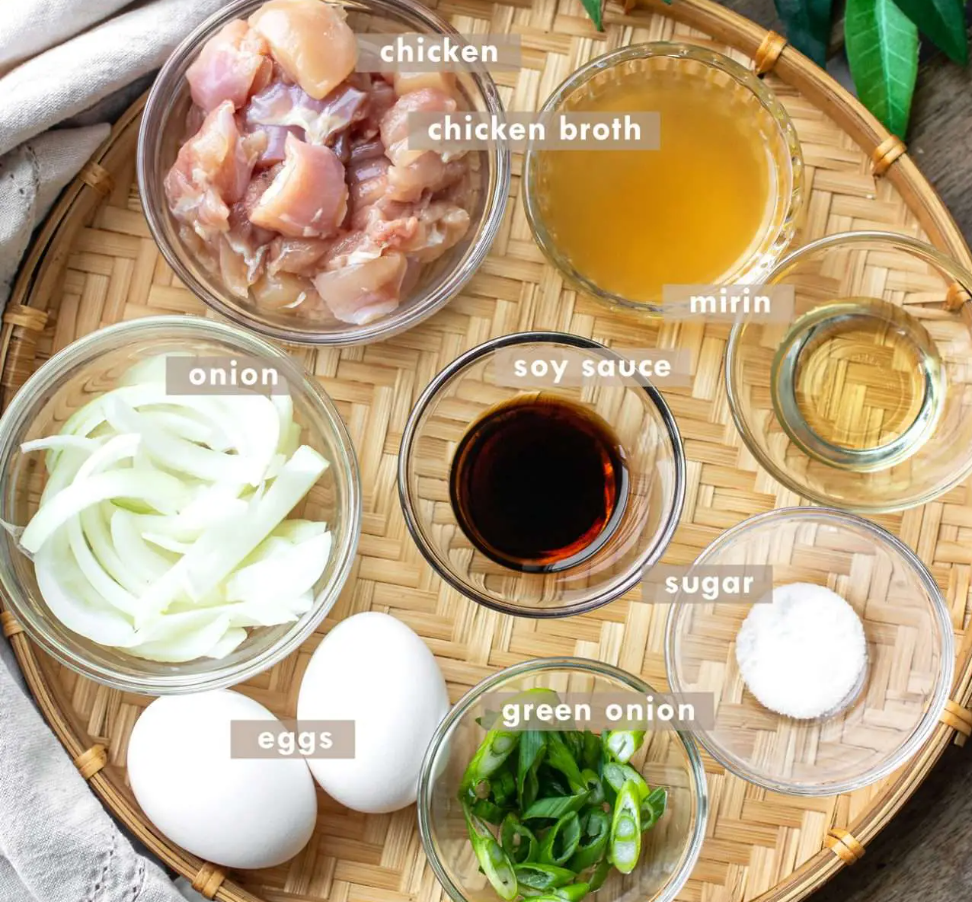
- Chicken: Boneless chicken cut into bite-sized pieces cooks quickly and evenly. Chicken thighs are particularly suitable because they remain tender during simmering, although chicken breast can also be used.
- Eggs: The defining ingredient of Oyakodon. Lightly beaten eggs create a soft texture when poured over the simmering chicken and broth.
- Red and white onions: These provide aromatic sweetness and texture. Using two types of onions adds variety, although either variety works independently.
- Soy sauce: Supplies saltiness, color, and savory depth. Japanese soy sauce is an excellent choice, but regular light soy sauce can also work.
- Mirin: A sweet Japanese cooking seasoning that balances the soy sauce. It helps create Oyakodon’s characteristic savory-sweet flavor.
- Chicken bouillon: A convenient alternative to making dashi. Be mindful of the amount because bouillon cubes and soy sauce both contain salt.
- Fresh leeks or green onions: Added toward the end to provide freshness, color, and mild onion flavor.
- Steamed rice: The foundation of the dish. Japanese short-grain rice is a traditional choice, but any freshly cooked rice you enjoy can work.
Cooking Tips for Tender Chicken and Soft Eggs
Simmer Gently Rather Than Boiling Aggressively
Oyakodon is primarily a simmered dish, not a stir-fry.
Once the seasoned liquid begins bubbling, reduce the heat so the chicken cooks gently and the liquid doesn’t evaporate too quickly.
Avoid Overcooking the Chicken
Cut the chicken into similar-sized pieces and simmer until fully cooked.
For food safety, chicken should reach an internal temperature of 74°C (165°F).
Add the Eggs Toward the End
Pour lightly beaten eggs over the chicken and onions once the chicken is cooked.
Keep the heat gentle so the eggs can set without becoming tough or rubbery. Cook eggs until set, particularly when preparing food for children or anyone at higher risk of foodborne illness.
Watch the Salt Level
Since soy sauce and chicken bouillon both contribute salt, taste the cooking liquid before adding more seasoning.
Different brands can vary considerably in sodium content.
Serve Immediately
Oyakodon is best enjoyed while the eggs are tender and the rice is hot.
The warm seasoned broth should lightly coat the rice rather than turn it into soup.
What to Serve with Oyakodon
Miso soup: A classic Japanese-style accompaniment that complements the rich chicken and egg bowl.
Japanese pickles: Their acidity and crisp texture provide contrast to the soft rice and savory toppings.
Cucumber salad: A light, refreshing side dish that balances the richness of the eggs.
Steamed vegetables: Broccoli, bok choy, or other greens add color and variety to the meal.
Hot green tea: A simple beverage pairing that works nicely with Japanese home-style dishes.

Storage and Reheating
Refrigeration
Store leftover Oyakodon in an airtight container and refrigerate promptly at 4°C (40°F) or below.
For best texture, refrigerate the chicken and egg topping separately from the rice when possible.
Cooked chicken and egg leftovers should generally be used within three to four days when properly refrigerated.
Freezing
The cooked chicken component can be frozen, although the egg texture may become watery or rubbery after thawing.
For better results, freeze the seasoned cooked chicken separately and prepare fresh eggs when reheating.
Reheating
Reheat refrigerated leftovers thoroughly to an internal temperature of 74°C (165°F).
A covered saucepan over gentle heat works well. Add a small splash of water if the sauce has thickened too much.
Refrigerate cooked rice promptly, and reheat it thoroughly rather than leaving it at room temperature for extended periods.
Shelf Life and Food Safety
Avoid leaving cooked chicken, eggs, or rice unrefrigerated for more than two hours, or one hour when ambient temperatures exceed 32°C (90°F).
Use clean containers and utensils when handling leftovers.
Substitutions and Variations
Chicken thighs or breasts: Both work, although thighs generally remain juicier.
Dashi instead of chicken bouillon: For a more traditional Japanese flavor, replace the bouillon broth with prepared dashi.
White onions only: If red onions aren’t available, regular white or yellow onions will work.
Less sodium: Use reduced-sodium soy sauce and a lower-sodium broth, then adjust the seasoning carefully.
More vegetables: Add a modest amount of mushrooms or leafy greens for a variation, keeping in mind that additional vegetables may release water and change the broth’s concentration.
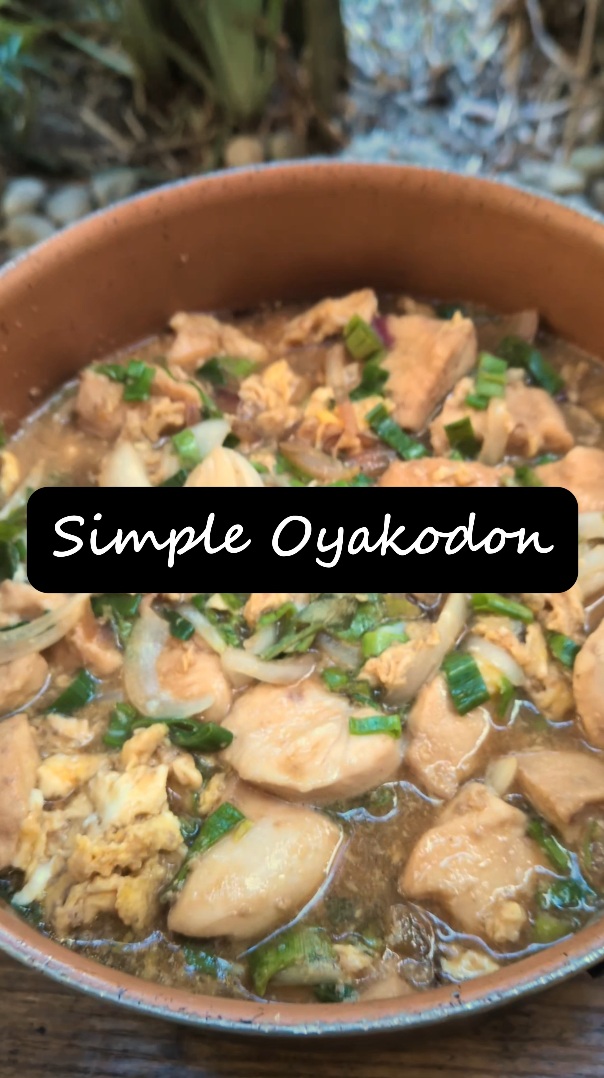

Easy Oyakodon Recipe (Japanese Chicken and Egg Rice Bowl)
Ingredients
Method
- Prepare the ingredients. Cut the chicken into bite-sized pieces, slice the red and white onions, and lightly beat the eggs in a bowl. Set aside the chopped leeks or green onions for garnish.
- Arrange the chicken and sliced red onion in a shallow saucepan or frying pan.
- Pour in the soy sauce, mirin, and water. Add the chicken bouillon cube and stir gently to distribute the seasonings.
- Bring the mixture to a gentle simmer over medium heat. Cover and cook until the chicken is tender and reaches an internal temperature of 74°C (165°F).
- Add the remaining sliced white onion and allow it to soften slightly while retaining some texture.
- Reduce the heat to low. Pour the lightly beaten eggs evenly over the simmering chicken and onions. Avoid stirring vigorously.
- Cover the pan and gently simmer until the eggs are set. This may take approximately 1–3 minutes depending on the heat and your preferred texture.
- Sprinkle chopped leeks or green onions over the finished dish.
- Divide the freshly steamed rice among four bowls. Spoon the chicken, eggs, onions, and savory cooking liquid over the rice. Serve immediately.
Notes
Looking for more easy home-cooked meals? Explore our collection of delicious recipes at Kusina Cooks for more everyday cooking inspiration.
Frequently Asked Questions
Can I Make Oyakodon Without Dashi?
Yes. While traditional Oyakodon often uses dashi, chicken broth or diluted chicken bouillon offers a convenient alternative.
The flavor will differ slightly from the traditional preparation but can still be delicious.
Why Are My Oyakodon Eggs Tough?
The heat may be too high, or the eggs may have cooked for too long.
Use gentle heat during the final stage and avoid vigorously stirring the eggs after adding them.
Can I Use Regular Filipino Rice?
Absolutely. Japanese short-grain rice offers a characteristic soft and slightly sticky texture, but ordinary steamed rice works well for a practical home-cooked version.
Is Oyakodon a Good Make-Ahead Meal?
The chicken and seasoned broth can be prepared ahead of time and refrigerated.
For better texture, add fresh beaten eggs when reheating the chicken mixture, then serve over freshly cooked rice.
Final Thoughts
A good Easy Oyakodon Recipe doesn’t need an elaborate ingredient list or complicated cooking techniques.
This easy Oyakodon recipe brings together tender chicken, sweet onions, seasoned broth, and soft eggs in a comforting bowl of rice.
It’s the kind of everyday dish that proves simple cooking can still deliver wonderful flavors.
Whether you’re exploring Japanese home cooking for the first time or simply looking for another satisfying chicken recipe, Oyakodon deserves a place in your regular meal rotation.
Curious about the history of Oyakodon? Discover the origins of this classic chicken and egg rice bowl through Japan’s Ministry of Agriculture and its traditional Japanese food archive.