
Sweet, Tangy, Salty and Hearty
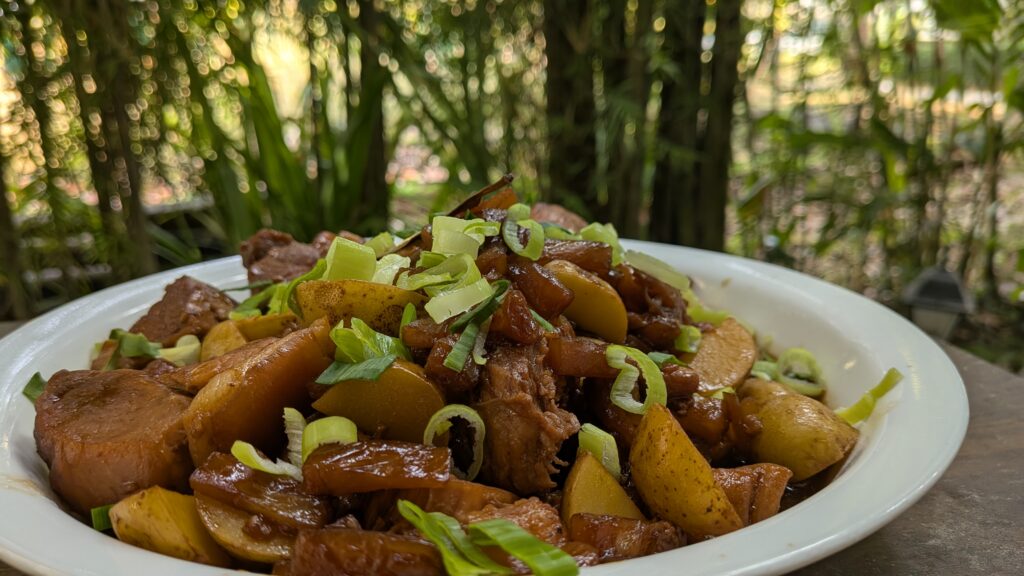
Pininyahang Adobo Recipe | Pork Adobo with Pineapple and Marble Potatoes
What is Pininyahang Adobo?
Pininyahang Adobo is a vibrant and flavorful evolution of the Philippines’ unofficial national dish. While the classic Adobo relies on the holy trinity of soy sauce, vinegar, and garlic, the “Pininyahan” version introduces a tropical brightness that transforms the profile entirely. In this version, we simmer tender chunks of pork with pineapple tidbits and the juice from the can, which adds sweetness and a fruity tang.
The result is a sauce that is deeply savory, slightly thick, and balanced by a refreshing fruity tang. Adding marble potatoes provides a creamy texture that soaks up the Adobo sauce, making every bite a hearty experience. It is a staple in many Filipino households when someone craves a meal that feels both familiar and special. Whether you’re a seasoned cook or new to Filipino cuisine, this dish offers a forgiving and rewarding entry point into the world of savory-sweet stews.
Table of Contents
Why This Recipe is a Game-Changer
- Natural Sweetness: By using the pineapple liquid from the can, we achieve a balanced sweetness without needing a single grain of processed sugar.
- Tenderization Hack: The bromelain enzymes in the pineapple juice help break down the pork fibers, ensuring a “melt-in-your-mouth” texture in less time.
- One-Pan Creaminess: Searing the marble potatoes directly in the sauce allows them to release starches that naturally thicken the Adobo glaze.
- Balanced Acidity: The use of cane vinegar provides a sharp, clean finish that cuts through the richness of the pork fat.
- Modern Convenience: This recipe utilizes pantry staples like Del Monte tidbits to deliver an “all-day simmered” flavor in a fraction of the time.
The Science of the Ingredients
The success of a great Pininyahang Adobo lies in how the ingredients interact. First, the Pineapple Juice serves a dual purpose: its acidity tenderizes the meat while its natural sugars caramelize during the simmer. We use Cane Vinegar because it is milder than distilled white vinegar, allowing the fruitiness of the dish to shine without being overpowered.
The addition of Oyster Sauce provides an umami backbone that bridges the gap between the salty soy sauce and the sweet pineapple. Finally, Marble Potatoes are preferred over large russets because their waxier skin holds its shape during the braising process, and their high starch content helps create that signature “sauce-to-rice” consistency that Adobo lovers crave.
Pininyahang Adobo (Pork Adobo with Pineapple)
Ingredients
- 1 kg Pork chunks Pork belly or shoulder
- 1 can 115g-200g Del Monte Pineapple Tidbits (reserve the liquid)
- 250 g Marble potatoes halved
- 5 cloves Garlic crushed
- 3-4 Bay leaves
- 2 tbsp Cooking oil
- 1/2 cup Soy sauce
- 2 tbsp Oyster sauce
- 1/4 cup Cane vinegar
- 1 Pork cube bouillon
- 1 cup Water adjust as needed
- Salt and black pepper to taste
- Sliced leeks or spring onions for garnish
Instructions
- Sear the Meat: Heat oil in a large pan. Add pork chunks and sear until all sides are browned and the fat begins to render.
- Aromatics: Add the crushed garlic and bay leaves. Sauté until the garlic is fragrant.
- The Sweet Base: Pour in the pineapple tidbits along with all the liquid from the can.
- Braising Liquid: Add the soy sauce, oyster sauce, and water. Stir to combine.
- Simmer: Cover and simmer on medium-low heat until the pork is tender (approximately 30-40 minutes).
- The Vinegar Step: Pour in the cane vinegar. Do not stir. Let it simmer for 5 minutes to allow the “raw” acidity of the vinegar to cook off.
- Seasoning: Add the pork cube. Taste and adjust with salt or pepper as desired.
- Potatoes: Add the halved marble potatoes. Cover and simmer for another 10-12 minutes or until the potatoes are fork-tender.
- Finish: Once the sauce has thickened to your liking, turn off the heat.
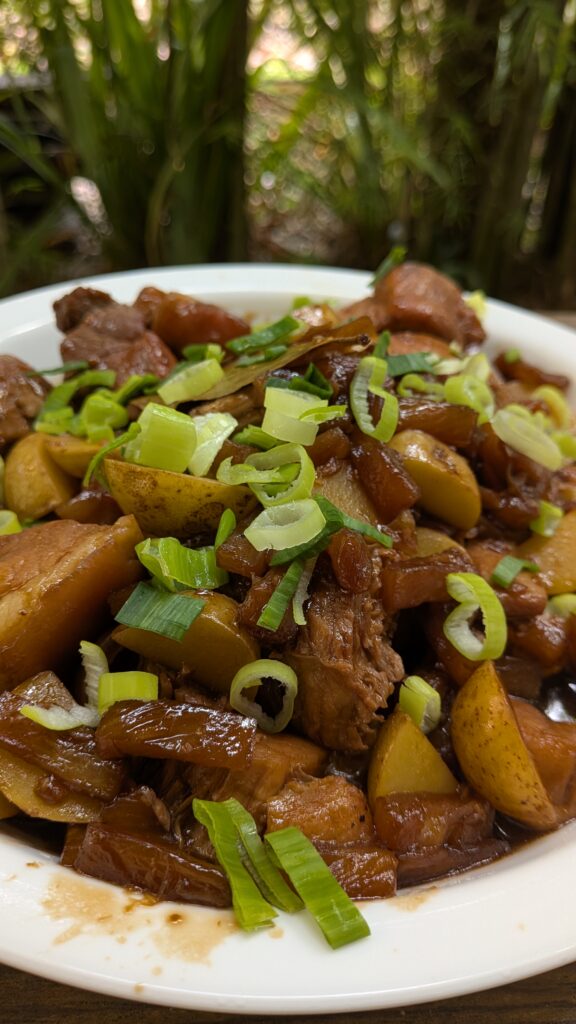
- Serve: Transfer to a serving dish, top with fresh leeks or spring onions, and serve with hot steamed rice.
Notes
Expert Tips & Troubleshooting
Storage and Refrigeration: Like all Adobo dishes, this actually tastes better the next day! Store in an airtight container in the fridge for up to 4 days. When reheating, add a splash of water to loosen the sauce as the starches from the potatoes will thicken it significantly while cold.
Sourcing: For the best results, use Del Monte Pineapple Tidbits. The specific acidity levels in their canning liquid are calibrated perfectly for Filipino savory dishes. If you can’t find marble potatoes, baby red potatoes are an excellent substitute.
Troubleshooting: If your sauce is too thin, remove the lid during the final 10 minutes of cooking to let the liquid reduce. If it’s too salty, add a few more pieces of potato—they act like a sponge and will soak up the excess sodium.
Flavor Upgrades: For a “Pro” finish, toss in a few whole peppercorns at the start of the simmer. If you want a bit of heat, a couple of Siling Labuyo (bird’s eye chilies) added during the last 5 minutes creates a beautiful spicy-sweet contrast.
History, Origins & Cultural Context
Adobo is more than a recipe; it is a prehistoric preservation method used by Filipinos long before the arrival of Spanish colonizers. The word “adobo” comes from the Spanish word adobar (to marinate), but the indigenous practice of stewing meat in vinegar and salt was already well-established to keep food from spoiling in the tropical heat.
Pininyahang Adobo is a regional variation that reflects the Philippines’ history as a major global producer of pineapples. As pineapple plantations flourished in provinces like Bukidnon, locals began integrating the fruit into their savory stews. This “fruity” adobo is particularly popular in Southern Luzon, where sweet and savory flavor profiles are celebrated. It represents the Filipino palate’s incredible ability to adapt and incorporate local agricultural abundance into ancestral cooking techniques.
What to Serve with Pininyahang Adobo
- Sinangag (Garlic Fried Rice): The garlicky notes perfectly complement the sweet pineapple sauce.
- Atchara (Pickled Papaya): The crunch and additional acidity provide a great palate cleanser.
- Cold Calamansi Juice: A refreshing citrus drink to balance the rich, savory pork.
Nutritional Breakdown & Moderation
This dish is a high-protein meal that offers vitamins from the pineapple and complex carbohydrates from the potatoes. To keep it balanced, opt for leaner cuts of pork (like loin or shoulder) and serve with a generous portion of steamed vegetables on the side.
More from the Kusina
Ready to cook? Share your version with #KusinaCooks!
More Recipes:
Watch more videos here 👉 Kusina Cooks – YouTube