
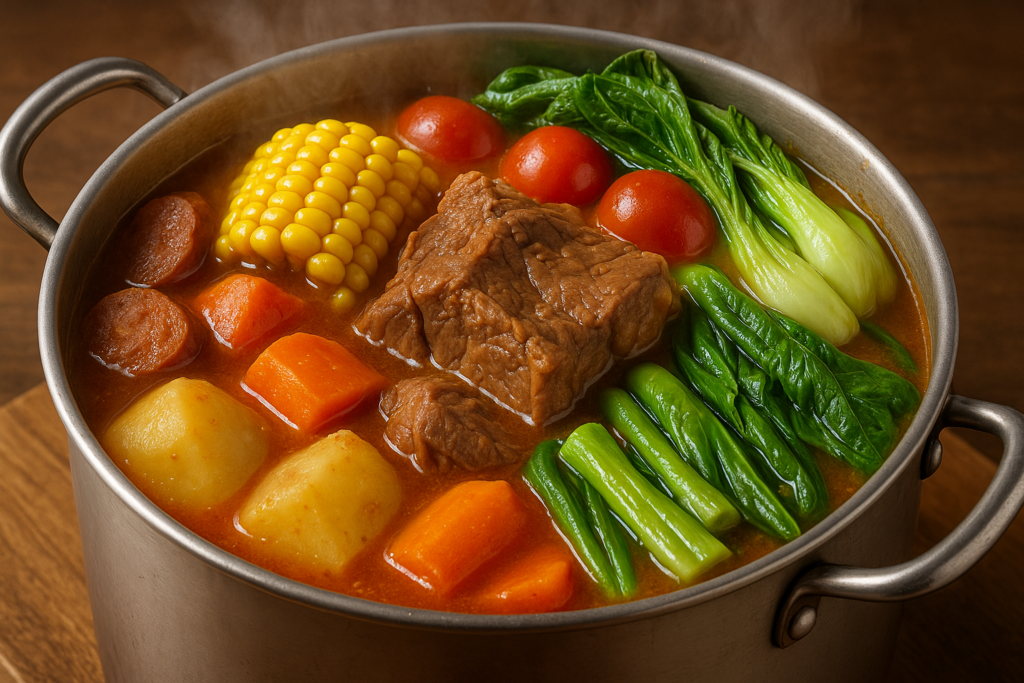
The Ultimate Comfort Dish from our kitchen
Beef Pochero Recipe | The Ultimate Filipino Comfort Food
What is Beef Pochero?
Bananas in beef stew? To the rest of the world, it sounds like a mistake. But if you grew up in a Filipino home, you know exactly what this is. Beef Pochero isn’t just a recipe—it’s a ritual.
I’ve cooked in professional kitchens and experimented with complex international flavors, but when it’s a rainy Sunday or I just need a dish that feels like a warm embrace, this is what goes on my stove. Simmered beef shank, sweet saba bananas, crisp cabbage, and rich bone marrow melting into a tomato-tinted broth… this isn’t just dinner. It’s childhood on a spoon.
We’re stripping away the “AI-generated” fluff today. No more robots, just real cooking. Let’s talk about how to make a Pochero that actually works for a busy family, balancing that sweet, savory, and sacred flavor profile without spending your entire weekend trapped in the kitchen.
Table of Contents
The Secret to the Perfect Pochero
A lot of people throw everything into a pot and boil it until it’s mush. That’s a mistake. The magic of a real Pochero is in the timing.
- The Broth Foundation: We use beef shank (with the bone marrow intact). The marrow provides a deeply rich, collagen-heavy base that coats the back of your spoon.
- The Sweet Counterpoint: Saba bananas are non-negotiable. Don’t use regular eating bananas; they will disintegrate. Saba holds its shape and provides a starchy sweetness that cuts right through the heavy beef fat.
- Texture Control: Baguio beans and cabbage go in at the very end. We want a slight crunch to break up the richness of the tender beef.
Ingredients
The Meat & Broth:
- 1 kg Beef shank (Bulalo cut, bone-in with marrow)
- 1 large red onion, quartered
- 4 cloves garlic, smashed
- 1 tsp whole black peppercorns
- 2 tbsp fish sauce (patis)
- Water (enough to submerge the beef)
The Vegetables & Flavor:
- 1 small can (150g) tomato sauce (or 3 fresh tomatoes, quartered)
- 4 pieces Saba bananas, peeled and sliced in half diagonally
- 2 medium potatoes, peeled and quartered
- 1 bundle Baguio beans (green beans), ends trimmed
- 1 small head of cabbage (or Pechay), leaves separated
- Salt to taste
Procedure
- The Clean Boil: Place the beef shanks in a large, heavy-bottomed pot. Cover with water and bring to a rolling boil for 10 minutes. Chef’s Rule: Skim the gray scum that floats to the top. This is non-negotiable if you want a clean, appetizing broth.
- The Low Simmer: Once the broth is clear of scum, add the smashed garlic, quartered onions, whole peppercorns, and fish sauce. Lower the heat to a gentle simmer, cover, and let it cook for 1.5 to 2 hours until the beef is fall-off-the-bone tender. (If using a pressure cooker, this takes about 40 minutes).
- Build the Body: Once the beef is tender, stir in the tomato sauce. Let it simmer for another 10 minutes to cook out the raw tomato flavor.
- Layer the Starches: Add the potatoes and saba bananas. Cook for about 10-12 minutes, or until you can easily pierce the potatoes with a fork.
- The Final Crunch: Turn off the heat. Push the Baguio beans and cabbage leaves down into the hot broth. Cover the pot and let it sit for 5 minutes. The residual heat will cook the greens perfectly without turning them soggy.
- Serve: Transfer to a large serving bowl, making sure the bone marrow is sitting proudly on top. Serve immediately with a mountain of steaming white rice.
Javi’s Expert Tips & Troubleshooting
- Protect the Marrow: If you boil the soup too aggressively, the marrow will completely melt out of the bone and make the soup overly greasy. Keep it at a gentle simmer.
- The “Sangkutsa” Option: Some families like to sauté the garlic, onions, and beef in a little oil before adding water. This creates a deeper, browner flavor. I skip this step when I want a lighter, cleaner tasting broth for the kids, but try it if you want maximum savory depth!
- Dipping Sauce (Sawsawan): A true Filipino meal is interactive. Serve this with a small saucer of fish sauce, a squeeze of calamansi, and a crushed bird’s eye chili (siling labuyo) on the side.
The History in the Pot
Pochero actually traces its roots back to the Spanish puchero—a peasant stew. But over the centuries, Filipinos adapted it using what was growing in our own backyards. We swapped out European ingredients for saba bananas, local beans, and fish sauce.
It’s a perfect example of cultural survival and adaptation. When you sit down with your family to eat this, you aren’t just having dinner; you are tasting history. It’s a reminder that no matter how chaotic the week has been, a slow-simmered pot of food has the power to bring everyone back to center.
Watch it in the Kusina!
Want to see exactly how tender that beef gets? Check out the quick 60-second process in our kitchen: ▶️ Watch the Beef Pochero Short Here
More Recipe Here!
What to Cook Next:
If you loved the slow-simmered comfort of this Pochero, you need to check out our other heritage recipes: